A principal in Nagpur recently told us she had shortlisted three vendors for her school's digital transition. One called itself "administration software." Another called itself a "management system." The third called itself an "ERP." All three did roughly the same thing, but she spent two weeks trying to figure out if she was comparing apples to apples.
She isn't alone. Search "school administration software" or "online school management system" and you'll get overlapping results, similar screenshots, and vendors using the terms interchangeably. That confusion costs schools time, and sometimes it costs them a bad purchase decision.
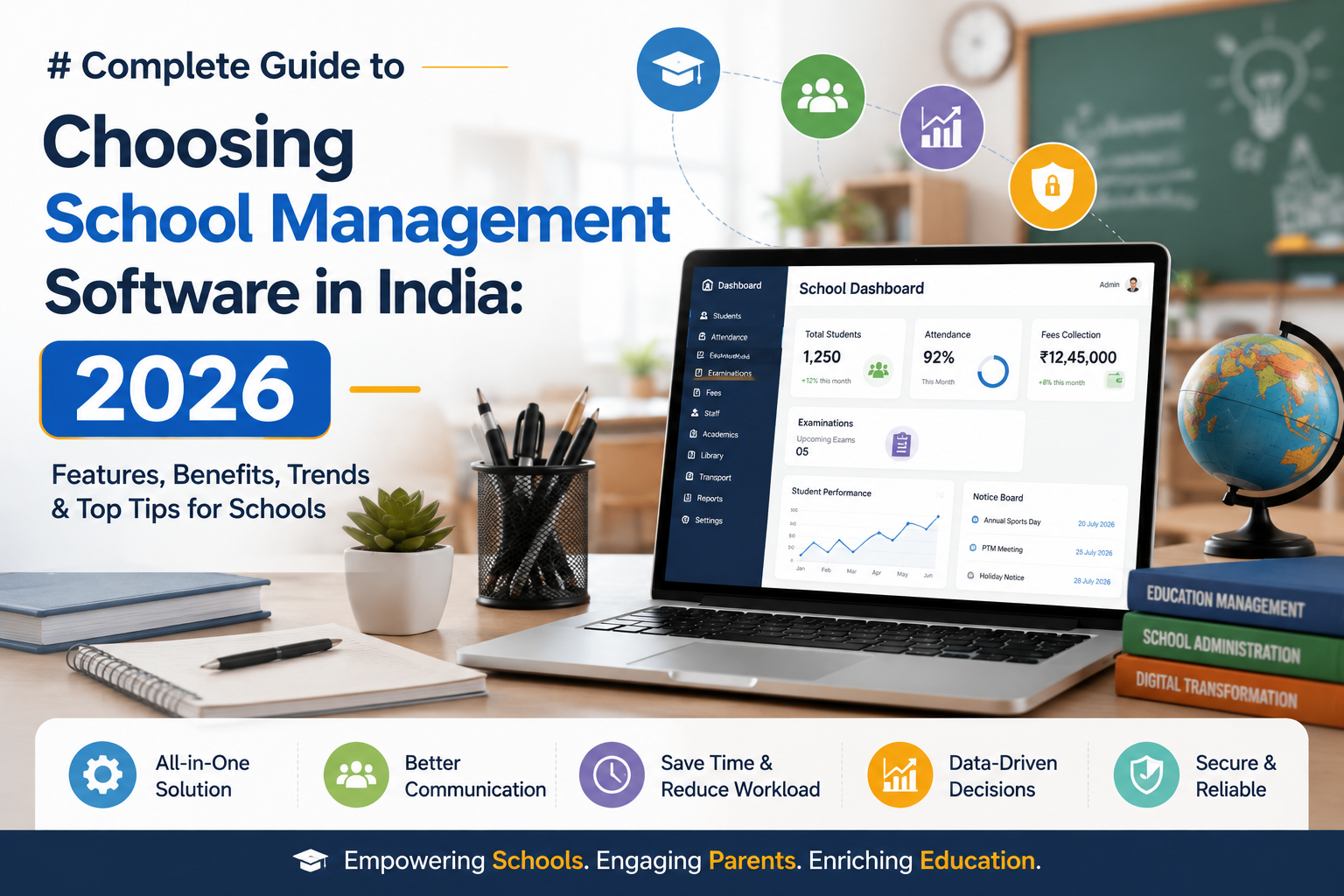
This guide clears up the terminology, explains what actually separates the categories (if anything), and gives you a practical framework for choosing the best school ERP software for your institution in 2026.
What Is School Administration Software?
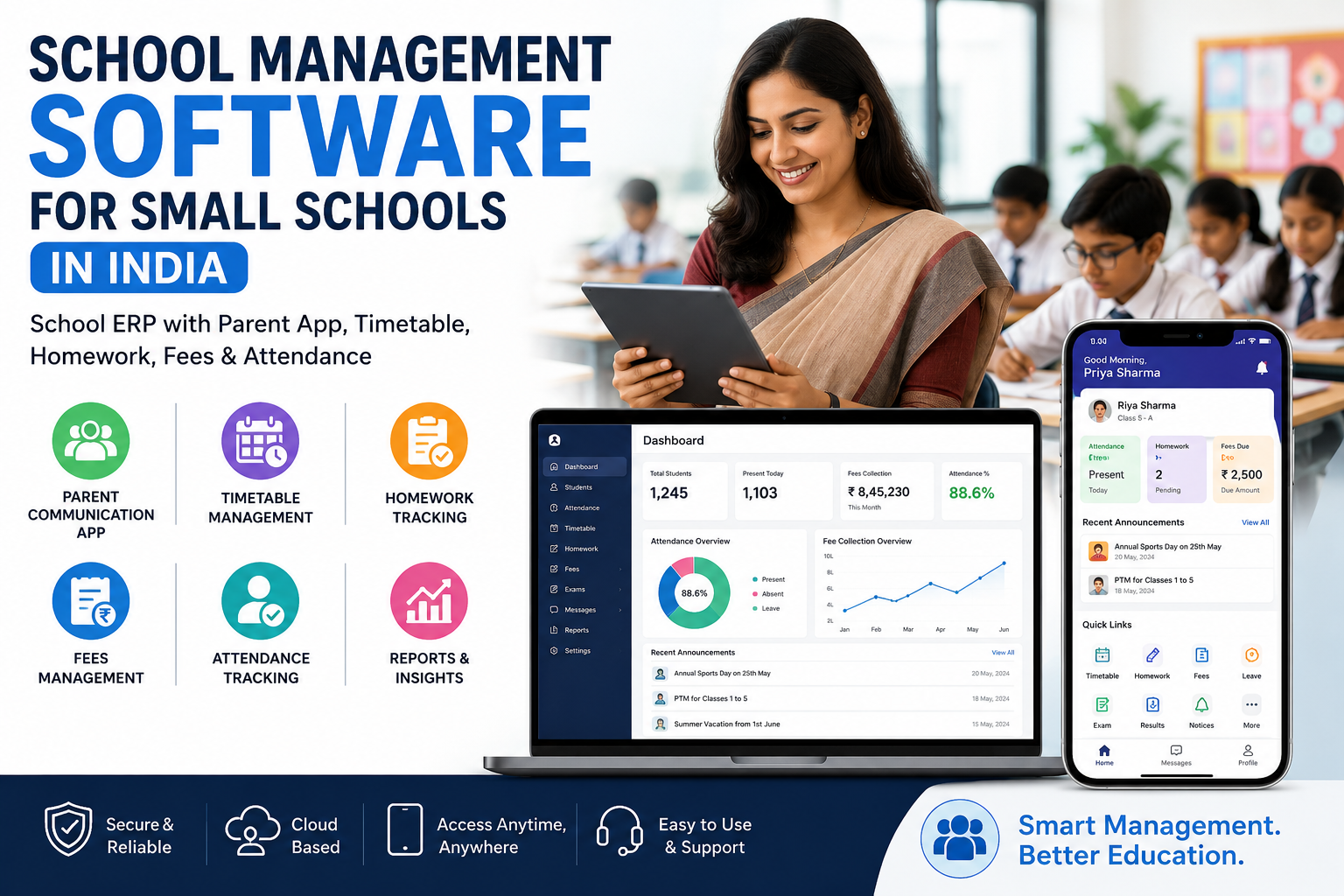
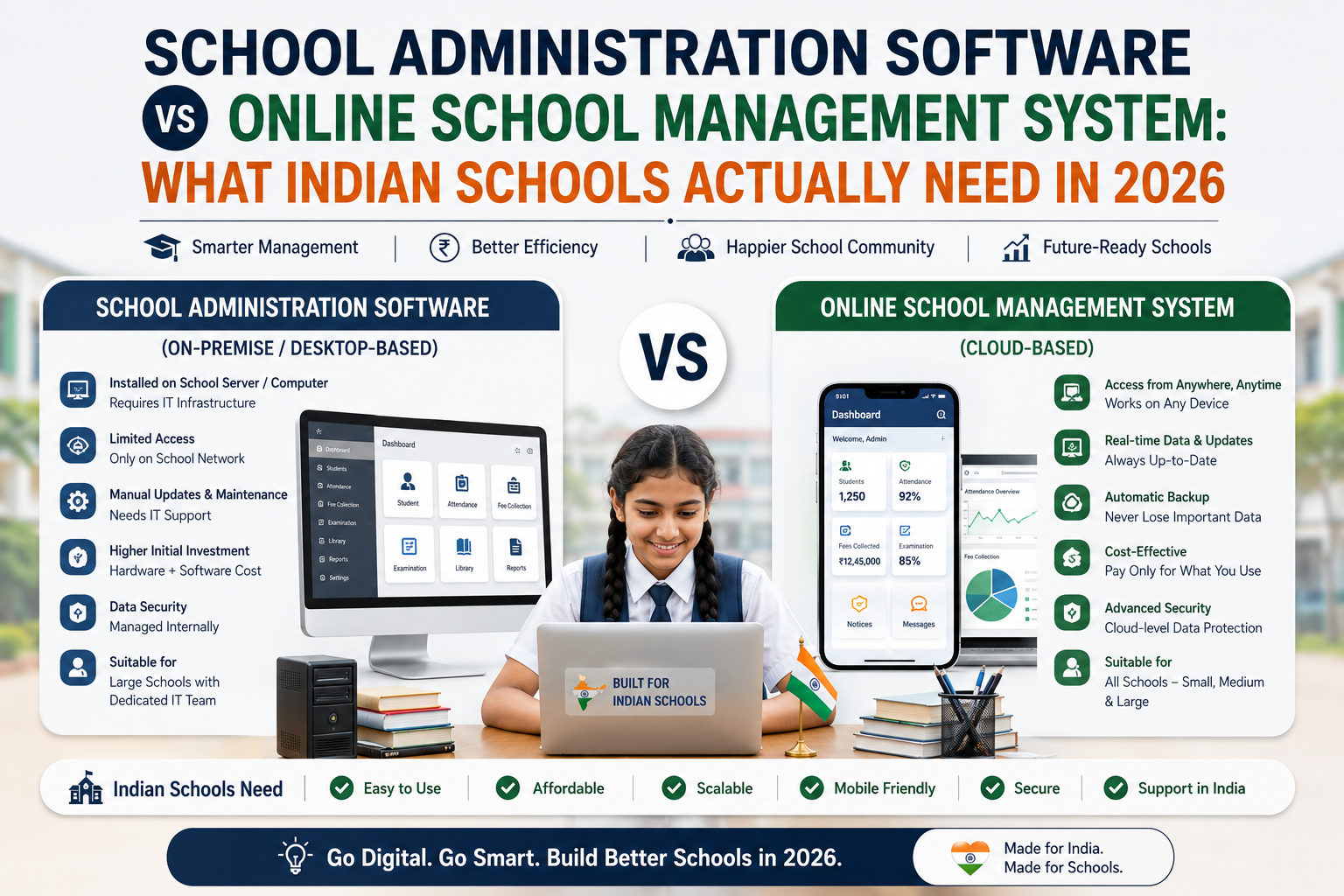
School administration software is a digital tool built to handle the day-to-day operational and clerical work of running a school. Think staff records, attendance registers, leave approvals, fee collection, timetable creation, and internal communication. Its job is to replace registers, spreadsheets, and paper files with a single digital record.
The word "administration" is the giveaway. These tools are usually built with the office staff, principal, and administrative team in mind first, and academics second. Older, on-premise systems used in Indian schools through the 2010s mostly fell into this category. They digitised the office but rarely touched the classroom.
What Is an Online School Management System?
An online school management system covers everything administration software does, and then extends into academics, communication, and stakeholder engagement. That means lesson planning, assignment tracking, exam and report card management, parent-teacher communication, and often a dedicated app for students and parents.
The word "online" matters too. These platforms are cloud-based, which means the school doesn't need a server room, and staff, teachers, and parents can log in from a phone or laptop from anywhere. Most schools evaluating software in India today are really looking for this broader, cloud-first category, even when they type "school administration software" into Google.
Are They Really Different Categories?
In practice, no, not anymore. A few years ago, the distinction was real. Administration software handled the office. Management systems handled the school. Today, nearly every serious vendor has merged the two, because no school wants to buy one tool for attendance and a separate one for assignments.
When you see "school administration software" and "online school management system" used as search terms, they are pointing at the same buying decision: a single cloud platform that runs the entire school, from the front office to the classroom to the parent's phone. The safest approach is to stop worrying about what a vendor calls their product and instead check what modules it actually includes.
What Makes the Best School ERP Software for Indian Schools in 2026
India's school ERP market is projected to keep growing at a double-digit pace through 2031, and most of that growth is coming from cloud-based, subscription-priced platforms rather than the older on-premise installations schools used a decade ago. That shift changes what "best" means. Here's what to actually check.
1. Core modules that cover the full school year
At minimum, the platform should include:
-
Student management, admissions, records, and profiles
-
Attendance management for students and staff
-
Timetable management that can handle sections, subjects, and teacher availability
-
Exam management, including online and offline result entry
-
Fees management with receipts and payment logs
-
Assignment and lesson management for teachers
-
Staff and leave management
-
Announcements and a chat module for school-wide communication
If a platform is missing more than one or two of these, you're likely looking at a narrow administration tool rather than a complete school management software India schools can run on for the full academic year.
2. Cloud-based access, not just a desktop login
A genuinely online school management system should work from a browser and a mobile app, for teachers, students, parents, and staff alike, not just from a single admin desktop. This is the difference between a school office logging attendance once a day and a parent checking it in real time.
3. Role-based access
Not every user should see everything. A strong ERP system separates access into a super admin panel, a school admin panel, a teacher panel, a student and parent app, and a staff app, each with its own permissions. Read more about how this structure supports day-to-day operations in our complete buyer's checklist for school ERP software.
4. Transparent, student-based pricing
Indian schools generally pay somewhere between ₹100 and ₹500 per student per year, depending on the modules included, though smaller schools on entry-level plans can pay less overall. Ask for a clear breakdown by student and staff count rather than a single vague number, and confirm what happens if your enrolment grows mid-year. Our pricing packages are structured this way for exactly this reason.
5. Data security and ownership
Ask directly: is student data encrypted, is it sold or shared with third parties, and can the school export its own data if it switches providers later. If a vendor can't answer clearly, treat that as a warning sign, not a technicality.
Why School ERP Software India Needs Region-Specific Features
A management system built for schools in the US or Europe won't map cleanly onto how Indian schools actually operate. Before shortlisting any school ERP software India vendor, check for:
-
Support for Indian academic session structures (April to March, term and semester patterns)
-
Fee structures that handle instalments, late fees, transport fees, and sibling discounts separately
-
Multi-language support, including Hindi, for communication with parents
-
ID card and certificate generation aligned with formats Indian schools actually use
-
Transport and bus route tracking, which matters far more in India than in most Western markets
-
Support for multiple branches under one super admin, common for trust-run and chain schools
These aren't nice-to-haves. They're the features that decide whether a platform saves your office real time or just adds another login to manage. We covered several of the most common evaluation mistakes schools make here on their most common ERP selection mistakes.
How to Choose: A Practical Framework
Rather than debating terminology, walk through these four questions with any vendor:
-
Does it cover the whole school, or just the office? If it stops at attendance and fees, it's administration software in the older sense, not a full management system.
-
Can every stakeholder use it from their own device? Teachers, parents, and students should each have appropriate access, not just the admin team.
-
What does the pricing actually include? Get the per-student cost and a module-by-module breakdown before comparing vendors on price alone.
-
How long does setup actually take? Most schools can go live within 5 to 7 working days on a cloud platform if the data is ready, so treat anything promising instant activation, or anything dragging past a month, with caution.
If a platform passes all four, you're likely looking at genuinely strong school management software India schools can rely on long-term, regardless of what the vendor calls it on their homepage.
How LMScloud Brings Both Categories Together
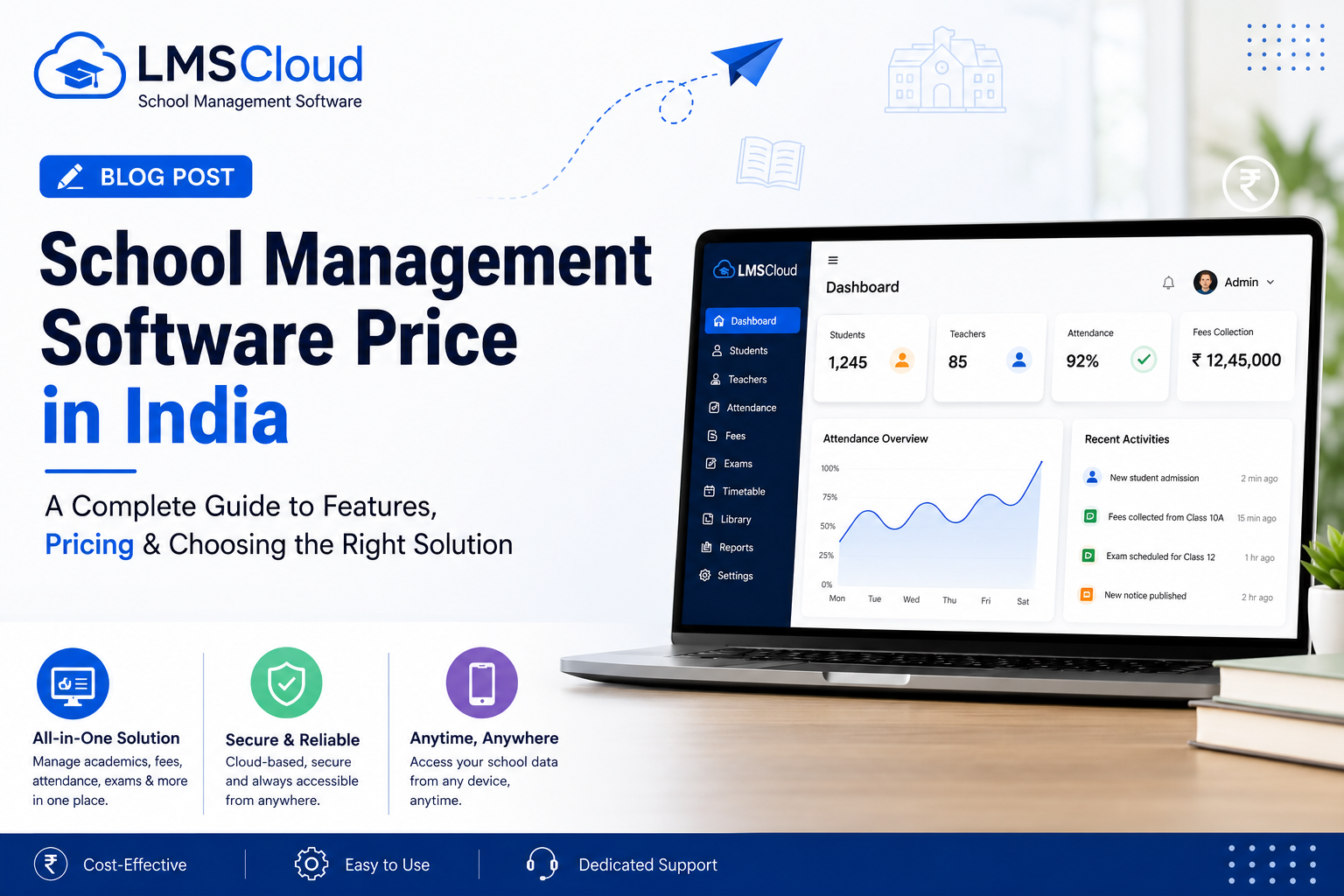
LMScloud was built specifically to close the gap between "administration software" and "management system" rather than pick a side. The platform includes a super admin panel for managing multiple schools, a school admin panel for daily operations, a dedicated teacher panel, and separate apps for students, parents, and staff.
That means one login structure covers admissions, attendance, timetables, exams, fees, assignments, staff leave, transport, and communication, all from a secure cloud platform accessible on mobile. Schools can see the full feature list here or explore a live demo school before making a decision.
For schools further along in their evaluation, our guide on the automated timetable module and our breakdown of why schools are moving to cloud ERP go deeper into two of the modules schools ask about most.
Frequently Asked Questions
Is school administration software the same as an online school management system? In most current products, yes. Both terms now refer to cloud-based platforms that handle school operations and academics together. Historically, administration software referred to a narrower, office-focused tool, but that distinction has mostly disappeared in modern ERP products.
What is the best school ERP software for a school in India? There's no single answer that fits every school. The best school ERP software for your institution is the one that covers your core modules (attendance, fees, exams, timetable, communication), works on mobile for parents and teachers, supports Indian academic and fee structures, and fits your per-student budget. Compare at least three vendors against that checklist before deciding.
How much does school management software cost in India? Most Indian schools pay somewhere between ₹100 and ₹500 per student per year, depending on the modules and plan tier. Entry-level plans for smaller schools typically start in the ₹10,000 to ₹20,000 per year range, while full-featured plans for larger schools with transport, ID cards, and multi-branch access cost more.
How long does it take to set up a school ERP system? Cloud-based platforms typically go live within 5 to 7 working days, provided the school has its student, staff, and academic data ready to upload. On-premise or heavily customised systems can take considerably longer.
Can one platform manage multiple school branches? Yes, platforms built with a super admin structure allow a trust or group to manage multiple schools from a single centralised dashboard, with individual admin panels for each branch.
Final Word
Stop shortlisting vendors by the label on their homepage. Whether a platform calls itself school administration software, an online school management system, or a full ERP, what matters is whether it covers your whole school, works for every stakeholder, and fits your budget without hidden costs. Use the checklist above on your next three vendor calls, and you'll cut through the naming confusion fast.
Ready to see it in practice? Register your school or explore the demo school to check LMScloud's modules against your own list.