Running a school today is far more complicated than it was a decade ago. Schools are expected to manage admissions, attendance, fees, homework, online classes, exams, report cards, and parent communication smoothly while maintaining academic quality.
Yet many schools in India still rely on spreadsheets, WhatsApp groups, paperwork, and disconnected software tools to handle daily operations.
This is exactly where School ERP software becomes important.
If you are a school owner, principal, or administrator wondering whether investing in a school management system is truly necessary, this guide will help you understand everything in simple terms.
We will also explain how to choose school management software without hiring expensive consultants or wasting money on overly complicated systems.
What Is School ERP Software?
School ERP software is a centralized digital platform that helps schools manage academic, administrative, and communication tasks from one system.
ERP stands for Enterprise Resource Planning. In schools, it means connecting all departments and processes through one cloud-based platform.
Instead of handling attendance in one register, fees in Excel, homework on WhatsApp, and exams manually, schools can manage everything from a single dashboard.
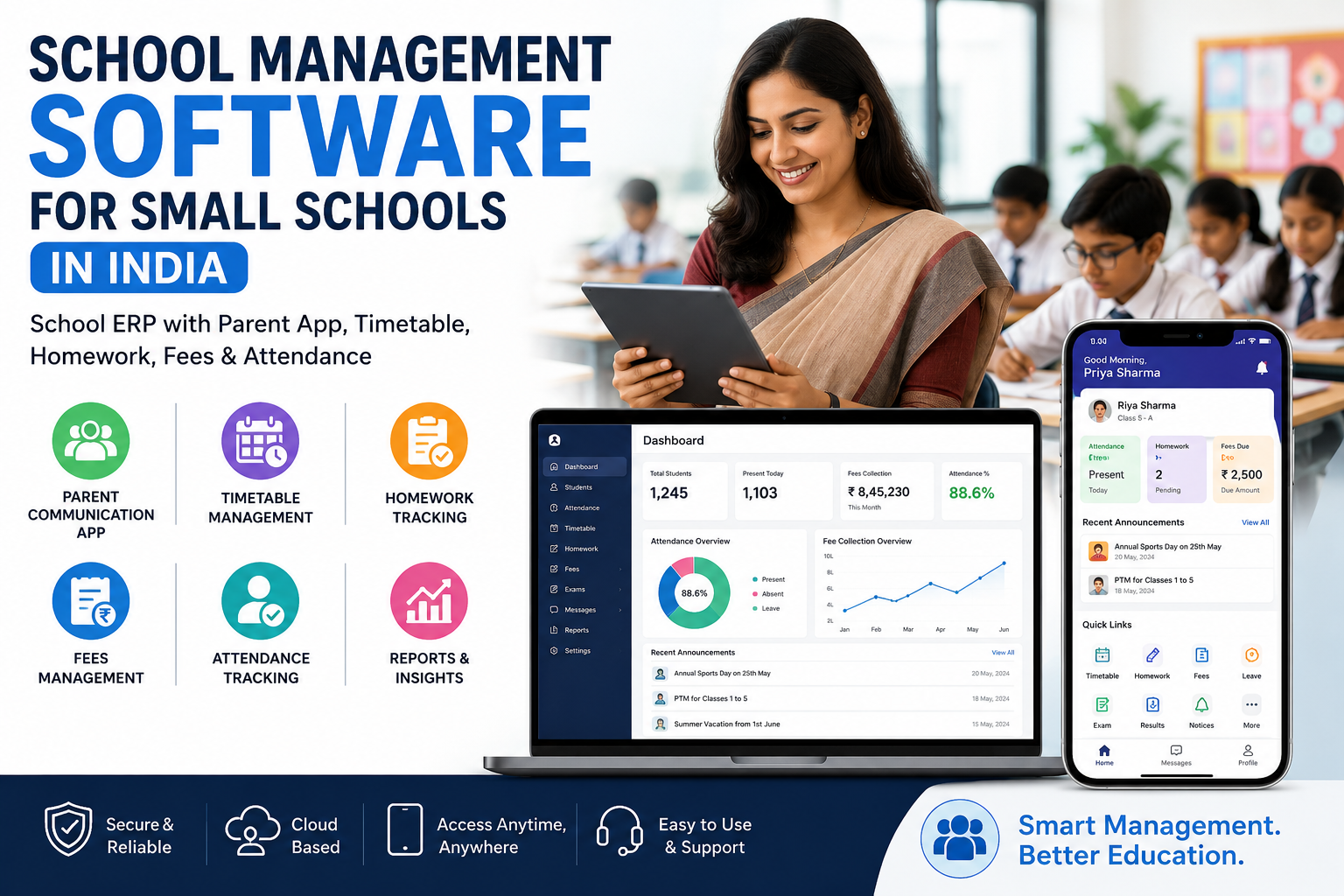
A modern school ERP typically includes:
-
Student information management
-
Attendance tracking
-
Fee management
-
Timetable scheduling
-
Homework tracking
-
Online exams
-
Teacher management
-
Parent communication
-
Report cards and analytics
Platforms like LMS Cloud combine ERP and LMS functionality to help Indian schools automate operations while improving communication between teachers, parents, and administrators.
Why Are Indian Schools Moving to School ERP Systems?
Most schools initially try to manage operations manually because it feels cheaper. But as student strength grows, manual systems create confusion, delays, and administrative pressure.
Here are some common problems schools face without ERP software:
Delayed Fee Collection
Tracking fee payments manually often leads to errors, pending dues, and difficult reconciliation processes.
A school ERP with fee management system automates reminders, receipts, and payment tracking.
Attendance Errors
Maintaining attendance registers manually consumes teacher time and increases chances of mistakes.
Software to manage school fees and attendance simplifies this process with digital records and instant reporting.
Parent Communication Problems
Many schools rely heavily on WhatsApp groups, which become difficult to organize.
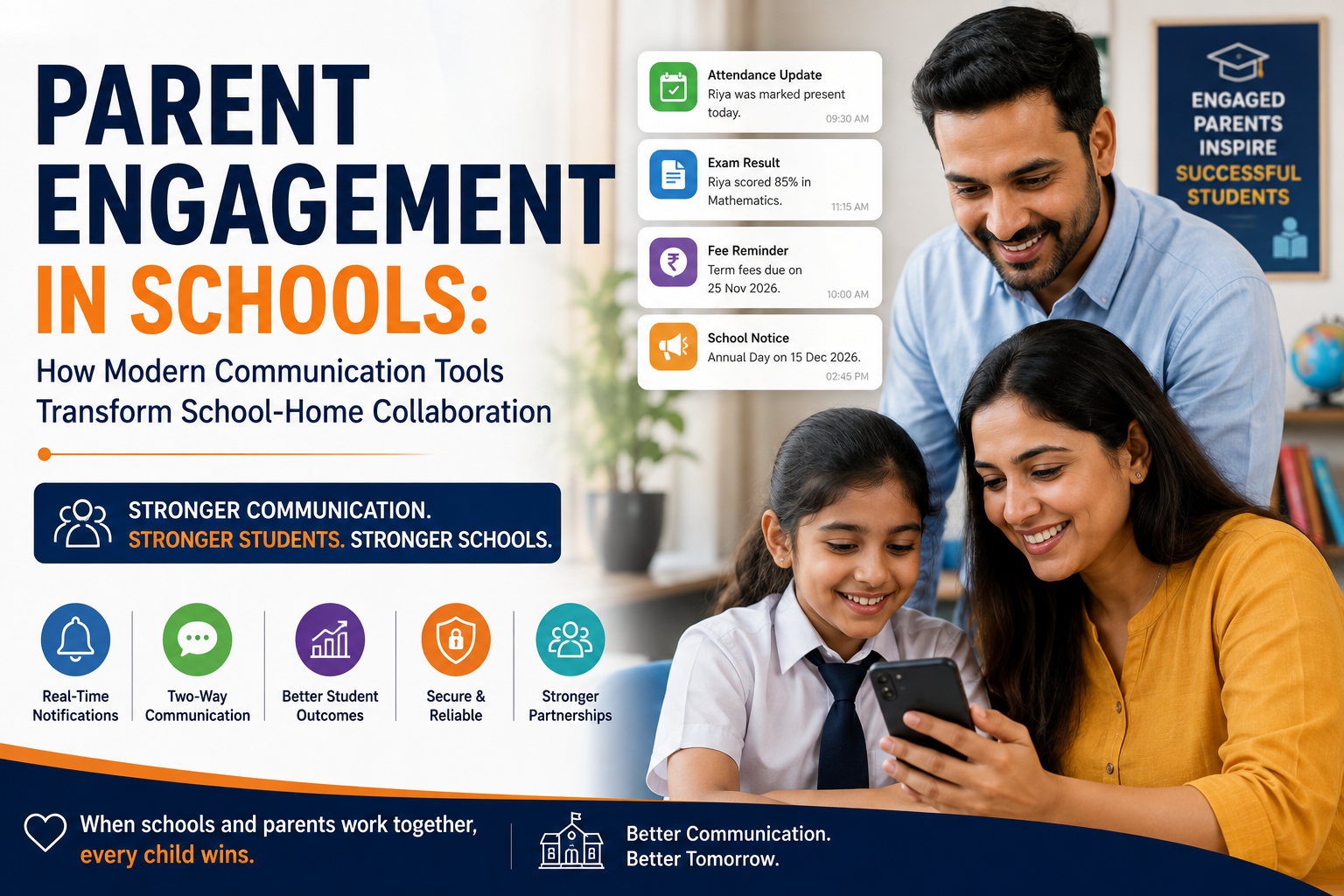
A school ERP with parent communication app centralizes notices, homework updates, announcements, and student performance tracking.
Timetable and Homework Confusion
Managing class schedules manually becomes chaotic, especially in CBSE and multi-section schools.
A school ERP with timetable and homework tracking helps teachers and students stay organized.
Administrative Workload
School staff often spend hours preparing reports, managing records, and coordinating between departments.
ERP automation significantly reduces repetitive administrative tasks.
Do Small Schools Really Need School ERP Software?
One of the biggest misconceptions is that ERP systems are only for large schools.
In reality, school management software for small schools in India is becoming increasingly important because smaller institutions often operate with limited administrative staff.
A cloud-based ERP allows small schools to:
-
Save administrative time
-
Reduce paperwork
-
Improve parent trust
-
Organize student records
-
Automate fee tracking
-
Digitize operations affordably
Today, even schools with a few hundred students are adopting ERP platforms to remain competitive and efficient.
What Features Should You Look for in School ERP Software?
Choosing the right ERP software is not about selecting the platform with the most features.
It is about choosing software that solves your school's daily operational challenges.
Here are the most important features Indian schools should prioritize.
1. Fee Management System
Your ERP should simplify:
-
Online fee collection
-
Due reminders
-
Receipt generation
-
Payment tracking
-
Financial reporting
This reduces manual accounting work and improves cash flow management.
2. Attendance Tracking
Digital attendance systems help teachers update records quickly while allowing parents to stay informed.
An ERP software for CBSE schools should support:
-
Student attendance
-
Teacher attendance
-
Leave tracking
-
Daily reports
3. Timetable and Homework Tracking
A school ERP with timetable and homework tracking helps:
-
Teachers assign homework digitally
-
Students access assignments anytime
-
Parents monitor academic activity
-
Schools avoid scheduling conflicts
4. Parent Communication App
Parent engagement is critical for modern schools.
Your ERP should include:
-
Instant notifications
-
Circular sharing
-
Homework updates
-
Exam alerts
-
Attendance notifications
This improves transparency and trust.
5. Cloud-Based Access
Cloud-based school ERP software allows schools to access data from anywhere without maintaining expensive servers.
This is especially useful for schools with multiple branches or hybrid learning systems.
How to Choose School Management Software Without Hiring Expensive Consultants
Many schools assume ERP implementation requires IT experts and costly consultants.
That is no longer true.
Modern ERP providers are building systems specifically for schools with limited technical knowledge.
Here is a practical way to choose the right software yourself.
Understand Your School’s Biggest Problems
Start by identifying operational bottlenecks.
Ask questions like:
-
Are fee collections difficult to track?
-
Is attendance management consuming too much time?
-
Are parents complaining about communication gaps?
-
Is timetable management becoming messy?
Your ERP should solve real problems, not just offer fancy dashboards.
Choose Easy-to-Use Software
Many ERP platforms fail because school staff find them too complex.
Look for:
-
Simple interface
-
Mobile-friendly dashboard
-
Easy teacher access
-
Minimal training requirements
Platforms like LMS Cloud focus on affordability and ease of use for Indian schools rather than overly technical systems.
Avoid Paying for Unnecessary Features
Some ERP vendors upsell advanced modules schools never use.
Focus first on:
-
Fees
-
Attendance
-
Homework
-
Timetable
-
Parent communication
-
Exams
You can always scale later.
Prefer Cloud-Based Systems
Cloud ERP systems reduce:
-
Hardware costs
-
IT maintenance
-
Data storage issues
-
Manual backups
They also allow schools to operate more flexibly.
Compare Support and Onboarding
Implementation support matters more than marketing promises.
Before finalizing software, check:
-
Customer support response time
-
Training assistance
-
Mobile app usability
-
Data migration support
Why LMS Cloud Is a Practical Option for Indian Schools
LMS Cloud positions itself as an affordable and scalable school ERP and LMS platform designed specifically for Indian educational institutions.
It combines essential school management tools including:
-
Fee management
-
Attendance tracking
-
Online exams
-
Timetable and homework tracking
-
Parent communication
-
Mobile app integration
Unlike many complicated ERP systems, LMS Cloud focuses on usability and cost-effective implementation for CBSE schools, private schools, coaching institutes, and growing educational institutions.
Final Thoughts
The question is no longer whether schools should digitize operations.
The real question is whether schools can continue growing efficiently without automation.
A good school ERP software does not just reduce paperwork. It improves communication, saves administrative time, organizes academic workflows, and creates a better experience for teachers, parents, and students.
For Indian schools looking for affordable, practical, and scalable software, choosing the right ERP platform can become a long-term operational advantage.