Imagine it's Monday morning.
The school receptionist is answering calls from parents asking about fee payments. Teachers are marking attendance on paper before entering it into Excel later. The accounts department is following up on overdue fees. The principal wants yesterday's attendance report before the morning meeting, while parents are still waiting for updates about homework and exam schedules.
This is still the reality in many schools across India.
Now imagine the same school six months later.
Attendance is recorded in seconds using a mobile app. Parents receive instant notifications. Fee reminders go out automatically. Online exams are conducted without extra software. The principal checks live reports from a dashboard before the school assembly even begins.
The difference is not a larger staff. It is the right cloud based school ERP.
Schools across India are rapidly moving toward digital administration because managing education has become more complex than ever. According to the LMSCloud brand vision, the platform is built to simplify school management through an affordable, scalable cloud solution that connects administrators, teachers, students, and parents in one place.
Why is School ERP Becoming a Priority in India?
The biggest trend in Indian education is not AI replacing teachers.
It is AI and automation helping schools eliminate repetitive administrative work.
Whether you manage a CBSE school, coaching institute, private academy, or educational institution in Delhi NCR, Ghaziabad, or anywhere in India, parents now expect digital communication, instant fee receipts, online learning support, and transparent student records.
Schools that continue depending on spreadsheets and manual registers often struggle with:
-
Delayed fee collection
-
Attendance errors
-
Communication gaps with parents
-
Time-consuming report generation
-
Multiple disconnected software systems
This is exactly where a modern education ERP system creates measurable value.
What Makes LMSCloud Different from Traditional School Management Software?
Many schools think buying software means adding another complicated system.
LMSCloud takes the opposite approach.
Instead of forcing schools to change their workflow, it digitizes existing processes while keeping the platform simple enough for teachers, accountants, administrators, and parents.
The platform includes:
-
Online fee management
-
Digital attendance tracking
-
Online examinations
-
Homework management
-
Parent communication
-
Student records
-
Timetable management
-
Mobile app access
-
Cloud storage
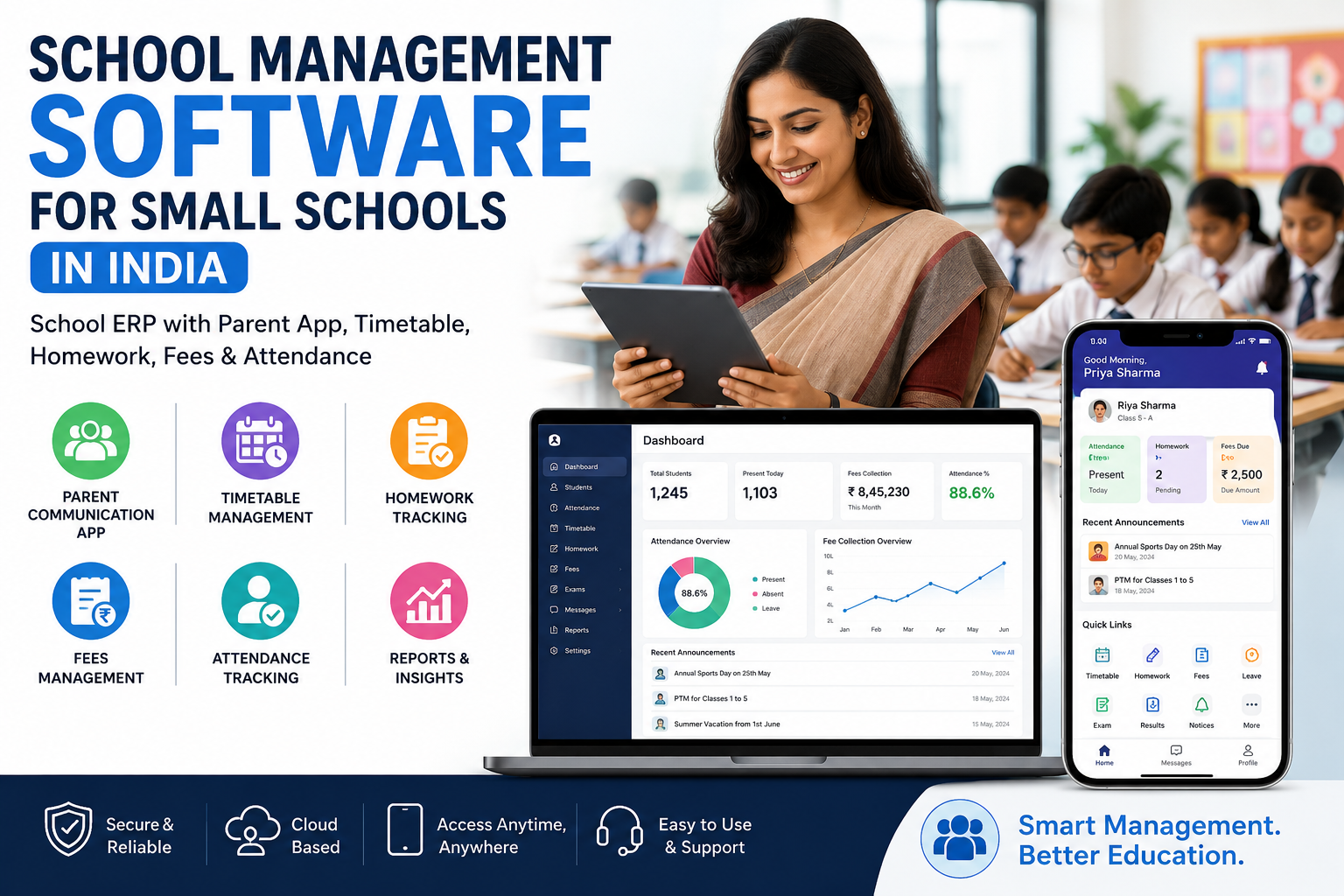
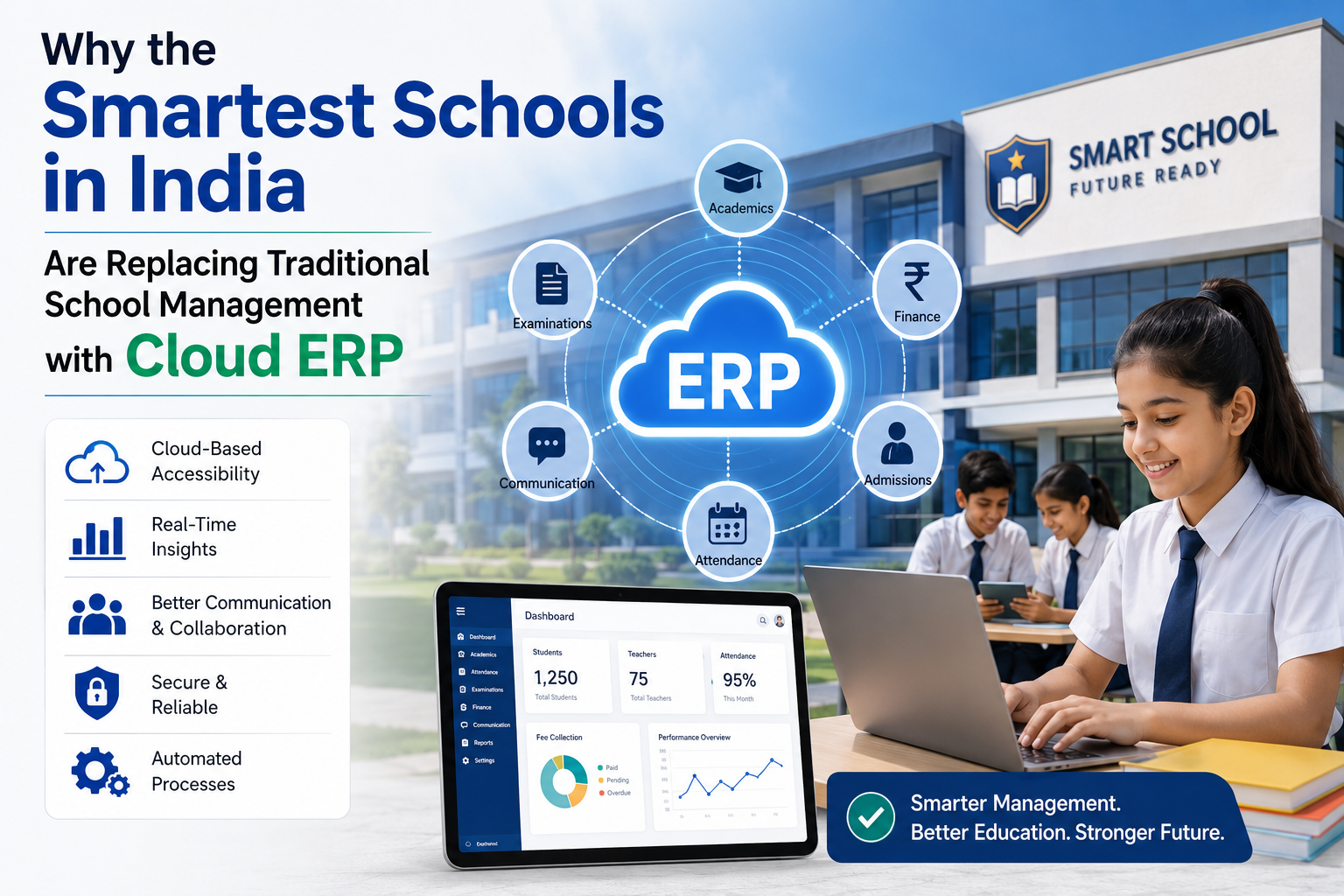
Because everything works from one dashboard, schools avoid maintaining multiple software subscriptions while reducing administrative workload. The platform is specifically designed for schools, coaching institutes, and educational institutions across India with cloud accessibility and mobile integration.
Teachmint vs Fedena vs LMSCloud: Which School ERP Fits Indian Schools Better?
Many decision-makers compare several ERP platforms before making a purchase.
Teachmint offers strong classroom engagement and online teaching capabilities.
Fedena is known for extensive administrative features and customization.
LMSCloud positions itself differently.
Instead of focusing only on classroom management or enterprise-level complexity, it combines affordability, cloud accessibility, mobile-first communication, fee management, attendance, online exams, and daily administration into one easy-to-use platform for Indian schools.
For growing schools that want fast implementation without overwhelming staff, LMSCloud offers a practical balance between functionality and usability.
Rather than paying separately for multiple tools, schools can manage operations from one centralized system.
How Does a Cloud Based School ERP Improve Parent Communication?
One of the biggest complaints parents have is not receiving timely updates.
A missed homework assignment becomes confusion.
A delayed fee reminder becomes frustration.
An unnoticed absence becomes a concern.
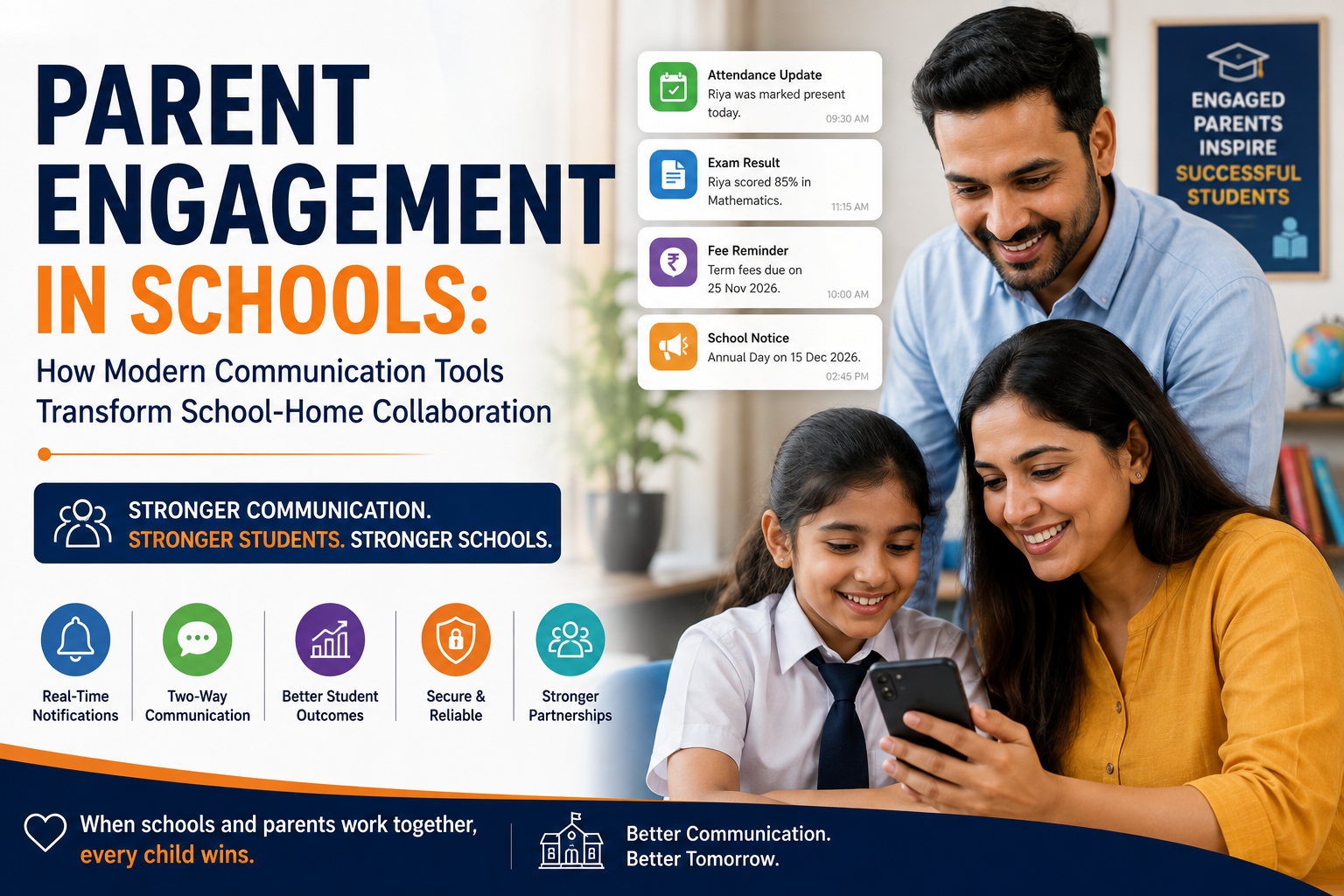
With LMSCloud, parents receive updates directly through the mobile application.
Schools can instantly share:
-
Attendance notifications
-
Homework
-
Circulars
-
Fee reminders
-
Exam schedules
-
Report cards
-
Holiday announcements
Instead of waiting for parent-teacher meetings, communication becomes continuous throughout the academic year.
Why Schools in Delhi NCR and Ghaziabad Are Moving Faster
Schools in Delhi NCR and Ghaziabad face increasing competition.
Parents compare schools not only by academic performance but also by digital experience.
When admissions open, parents often ask:
"Can I pay fees online?"
"Will I receive attendance notifications?"
"Is there a parent app?"
"Can my child attend online assessments?"
Schools using modern school management software answer "Yes" to all of these questions.
This creates a better parent experience while reducing administrative pressure on school staff.
Is LMSCloud the Best School ERP Software in India?
The best software depends on your institution's goals.
If your priority is reducing paperwork, improving operational efficiency, strengthening parent communication, automating fee collection, conducting online exams, and accessing reports from anywhere, LMSCloud provides a comprehensive ERP for schools built specifically for Indian educational institutions.
The future of school management is not about adding more administrators.
It is about empowering existing teams with smarter technology.
Schools that digitize today will spend less time on administration and more time delivering quality education tomorrow.
Looking for the best school ERP software in India?
Request a personalized LMSCloud demo and discover how one cloud platform can automate your school's daily operations while improving the experience for administrators, teachers, parents, and students alike.
1. What is the best school ERP software in India?
The best school ERP software in India is one that automates admissions, fee management, attendance, examinations, timetable scheduling, and parent communication from a single dashboard. LMSCloud is designed specifically for Indian schools, coaching institutes, and educational institutions, offering a cloud-based platform with a mobile app for administrators, teachers, students, and parents.
2. How does a cloud based school ERP improve school management?
A cloud based school ERP allows schools to manage operations from anywhere without installing software on local servers. It automates daily administrative tasks, provides real-time reports, simplifies fee collection, tracks attendance, conducts online exams, and improves communication between schools and parents through mobile notifications.
3. Is LMSCloud better than Teachmint or Fedena?
Every school has different requirements. Teachmint is known for digital classrooms, while Fedena focuses on comprehensive school administration. LMSCloud combines school management, fee automation, attendance, online examinations, parent communication, and mobile accessibility in one affordable platform, making it a practical choice for schools looking for an all-in-one ERP solution.
4. Can coaching institutes use LMSCloud?
Yes. LMSCloud is suitable for coaching institutes, CBSE schools, private schools, educational institutions, and training academies. It helps manage student records, fee collection, attendance, online assessments, homework, and communication from a centralized cloud platform.
5. Why are schools in Delhi NCR and Ghaziabad adopting school ERP software?
Schools in Delhi NCR and Ghaziabad are adopting school ERP software to reduce paperwork, automate administrative tasks, improve parent engagement, simplify fee collection, and provide digital access through mobile apps. These features help schools deliver a better experience while improving operational efficiency.